
Why is buckwheat gluten-free?
Buckwheat isn't wheat: it's the seed of a plant related to rhubarb. Why it has no gluten, whether it's safe for coeliacs, and how to cook with it.
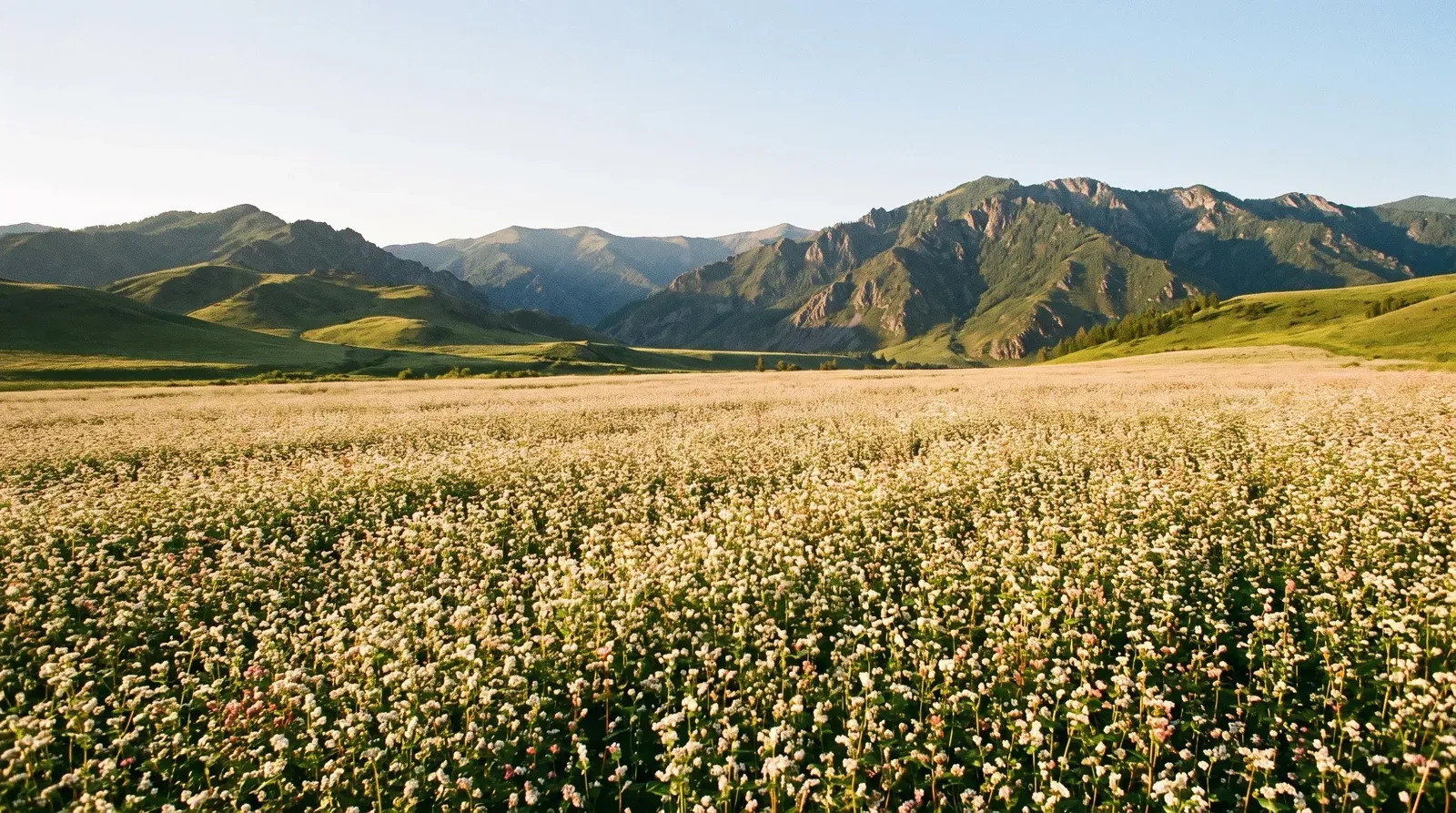
From the name, you'd think buckwheat was a kind of wheat. It isn't. And that's exactly why it has no gluten.
It's not a cereal
Wheat, barley and rye are grasses. Buckwheat (Fagopyrum esculentum) belongs to another family altogether: the knotweeds, the same family as rhubarb and sorrel. What we eat is its triangular seed, cooked and used like a grain. That makes it a pseudocereal, like quinoa and amaranth.
In Spanish it's called trigo sarraceno ("Saracen wheat") or alforfón: it reached Europe from the East, and the name stuck. Wheat it only resembles in the kitchen.
Why there's no gluten
Gluten forms from two groups of proteins, gliadins and glutenins, found only in wheat and its close relatives barley and rye. Buckwheat doesn't have them: its proteins are of a different kind. So it's gluten-free by nature, not because anything was taken out.
Nor is it lacking: 100 g of roasted groats give 11.7 g of plant protein, 10.3 g of fibre and almost half of a day's magnesium (USDA).
Is it safe for coeliacs?
The grain itself, yes. The risk is cross-contamination: milled or packed alongside wheat, it can carry traces. So if you're coeliac, buy buckwheat labelled gluten-free. Alekó is sold labelled that way, as groats and as flour.
How to use it
- Groats: cook in 15 to 20 minutes, like rice, with two cups of water per cup of grain. As a side, in soups, salads or for breakfast.
- Flour: for crêpes, cakes and bread. It's the flour of Russian blini and Breton galettes.
To start: gluten-free crêpes, porridge with walnuts and apple and all our recipes.
Alekó buckwheat comes from the fields of Altai, in Siberia. Find it in our shop, with delivery all over Chile.